
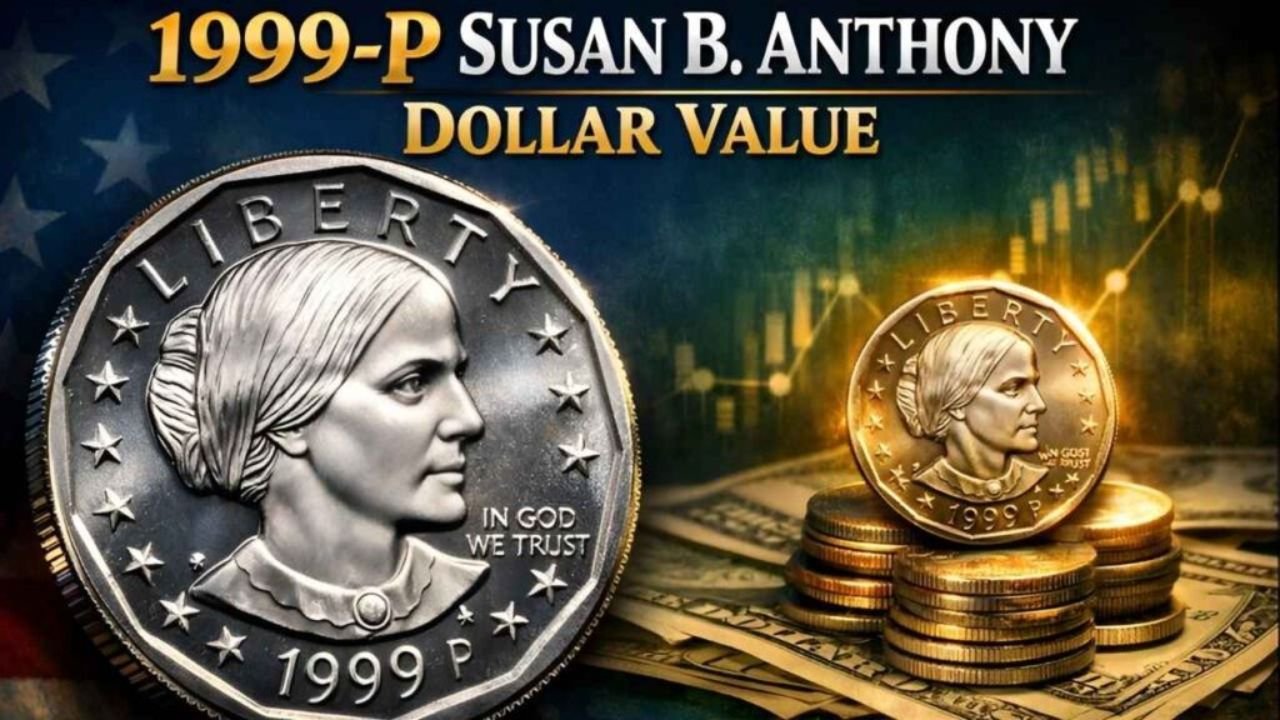
The 1999-P Susan B. Anthony Dollar is a coin many people have handled without ever giving it a second thought. For years, it was seen as an awkward design that never gained public acceptance. Yet as collectors move into 2026, this overlooked dollar has quietly become more desirable. Scarce high-grade examples, surprising mint errors, and its unique place in U.S. minting history have all contributed to renewed interest. While most examples remain worth face value, a small number can command prices ranging from hundreds to several thousand dollars.
Background of the 1999-P Susan B. Anthony Dollar
The Susan B. Anthony Dollar was first introduced in 1979 as an attempt to create a smaller, lighter dollar coin for everyday use. Despite its historic subject matter, the coin struggled in circulation because it was often confused with the quarter. Production ended in 1981, and for years the series appeared to be finished.
In 1999, the coin made an unexpected return. The U.S. Mint needed additional dollar coins to meet demand, especially for transit systems and vending machines, while the new Sacagawea Dollar was still in development. To bridge this gap, the Mint struck Susan B. Anthony Dollars one final time. The Philadelphia Mint produced millions of 1999-P coins, and most entered active circulation almost immediately.
Because these coins were heavily used, many show contact marks, scratches, and dull surfaces today. This widespread circulation is a key reason why truly sharp, well-preserved examples are much scarcer than the original mintage numbers suggest.
Why the 1999-P Dollar Has Collector Value in 2026
The rising value of the 1999-P Susan B. Anthony Dollar in 2026 is driven by a combination of condition rarity and collector demand. While the coin itself is not rare in terms of production, high-quality survivors are far less common.
Collectors today place strong emphasis on condition. Coins that retain original luster, sharp details, and minimal marks stand out immediately. As interest in modern U.S. coins grows, registry set collectors compete for the best examples, pushing prices higher for top-graded coins.
In addition to condition, mint errors play a major role. Error coins offer something visually unique, and when combined with a short-lived issue like the 1999-P, they become especially appealing to specialists.
Rare Errors and Special Varieties to Watch For
Some of the most valuable 1999-P Susan B. Anthony Dollars owe their worth entirely to unusual minting mistakes. These errors occurred during production and escaped detection before the coins entered circulation.
Struck on Sacagawea Dollar Planchet
The most famous and valuable error involves 1999-P coins struck on Sacagawea dollar planchets. These coins appear golden in color rather than the standard silver-gray and have a different weight and metallic composition. Certified examples of this error have sold for several thousand dollars, making it one of the most sought-after modern U.S. coin errors.
Off-Center and Double Strikes
Off-center strikes occur when the coin blank is not properly aligned during striking, leaving part of the design missing. Double strikes happen when a coin is struck more than once, creating overlapping or distorted images. Depending on how dramatic the error is, these coins can sell for hundreds or even thousands of dollars.
Missing Edge or Collar Errors
Coins struck without the retaining collar can spread outward, resulting in an unusually broad and sometimes misshapen coin. These errors are visually striking and highly collectible, especially when authenticated by a professional grading service.
Importance of High-Grade Coins
Even without errors, condition alone can dramatically affect value. Most circulated 1999-P Susan B. Anthony Dollars show heavy contact marks, particularly on the cheek and fields.
Coins graded MS65 and above are significantly scarcer and more desirable. At the top end, MS68 examples are extremely rare. These near-perfect coins attract registry collectors who are willing to pay premium prices to secure the finest known examples. In some cases, top-grade coins have reached four-figure price levels despite having no mint errors.
Collector Price Ranges in 2026
In today’s market, values can vary widely based on condition and rarity.
Circulated examples are typically worth only face value. Lightly circulated or uncirculated coins may sell for a few dollars. Certified MS65 coins often trade in the tens to low hundreds, depending on eye appeal. MS67 and higher examples can climb into the hundreds or thousands. Error coins, especially those struck on Sacagawea planchets, represent the highest tier of value.
How to Check Your Coin Properly
Identifying a valuable 1999-P Susan B. Anthony Dollar starts with careful inspection. Confirm the date and look for the “P” mint mark. Examine the coin under good lighting and magnification. Unusual color, distorted shapes, or alignment problems may indicate an error.
Never clean the coin, as cleaning can permanently damage the surface and reduce value. If a coin appears unusually well preserved or displays a potential error, professional grading is strongly recommended. Certification not only confirms authenticity but also increases market trust and resale potential.
Final Thoughts on the 1999-P Dollar in 2026
The 1999-P Susan B. Anthony Dollar proves that even modern coins with an unremarkable reputation can gain collector significance over time. While most examples remain common, rare errors and high-grade survivors show how value can emerge from unexpected places.
For collectors willing to look closely and invest in proper authentication, this coin offers an intriguing mix of history, rarity, and modern appeal. In 2026, the 1999-P Susan B. Anthony Dollar stands as a reminder that today’s pocket change can become tomorrow’s collectible.
Disclaimer:
This article is for informational purposes only. Coin values depend on condition, rarity, certification, and market demand, which may change over time. Prices mentioned are not guaranteed. Always consult certified grading services or experienced numismatic professionals before buying, selling, or investing in collectible coins.