
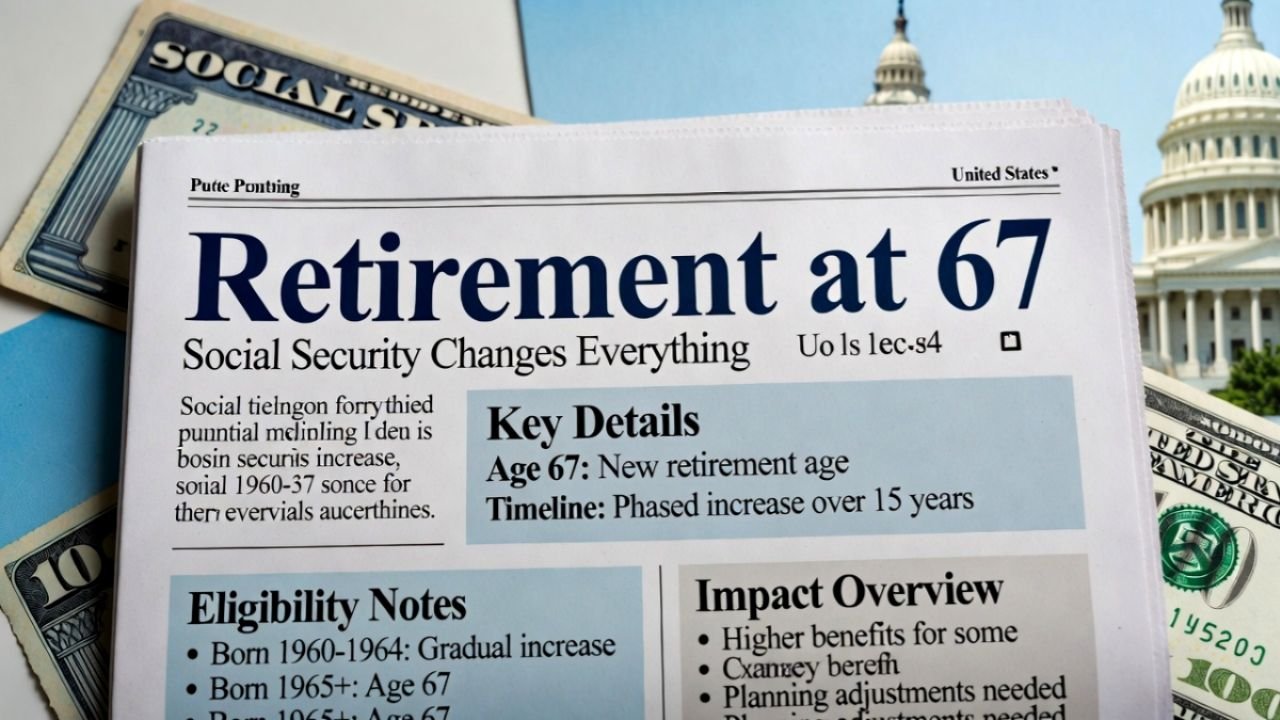
As 2026 begins, a major shift in Social Security is redefining retirement planning in the United States. The full retirement age has increased to 67, altering when Americans can claim benefits without reductions. This change has far-reaching implications for workers, retirees, and financial planning strategies, impacting everything from monthly income to long-term savings goals.
Understanding the New Retirement Age
The Social Security Administration now sets 67 as the standard age for full benefits for those born after 1960. Previously, many Americans expected to retire at 65 or 66. While individuals can still claim benefits earlier, starting payments before full retirement age results in permanently reduced monthly benefits. Delaying beyond 67 increases payouts, creating a trade-off between immediate access and long-term financial security.
Financial advisor Laura Mendel explains, “Adjusting retirement expectations is critical. With the full retirement age at 67, workers need to reconsider savings, investment strategies, and when to begin drawing Social Security to optimize lifetime benefits.”
Why the Change Matters
Raising the retirement age reflects broader demographic and economic realities. Increased life expectancy and the financial sustainability of Social Security funds are driving adjustments. By aligning full benefits with longer lifespans, the system aims to remain solvent while encouraging extended workforce participation.
For individuals, the implications are significant: delayed full benefits may require additional personal savings or extended employment, particularly for those who had planned to retire at 65. Conversely, delaying benefits can substantially increase monthly income in later years, helping offset longer retirement periods.
Early vs. Delayed Benefits
Workers now face critical choices:
- Early Retirement: Claiming Social Security before 67 reduces monthly benefits by a set percentage. Early retirement may provide immediate relief but results in smaller lifetime payments.
- Full Retirement Age (67): Collecting at full retirement age ensures the standard benefit amount without reductions. This option balances immediate needs with long-term security.
- Delayed Retirement: Postponing benefits beyond 67 accrues delayed retirement credits, increasing monthly payments. This strategy is ideal for those in good health with longer life expectancy.
Financial planners recommend evaluating personal health, career plans, and retirement savings to make informed decisions.
Planning for the New Reality
Adjusting to the new retirement age requires proactive financial planning. Workers may need to:
- Increase contributions to retirement accounts such as 401(k)s or IRAs.
- Delay withdrawals from personal savings to maximize compounding growth.
- Reassess long-term budgets, factoring in later Social Security access.
- Consider part-time work or phased retirement options to bridge income gaps.
Understanding these strategies ensures retirees maintain financial stability while adapting to policy changes.
Impact on Younger Generations
Younger workers face the longest-term effects of this change. By the time they reach retirement, full benefits at 67 will be the standard. Starting financial planning early—through diversified investments, savings, and employer-sponsored retirement accounts—is essential. The earlier individuals adjust to the revised timeline, the greater the potential to optimize benefits and avoid financial shortfalls.
Social Security and the Broader Economy
The increase in retirement age also has macroeconomic implications. Longer workforce participation can support economic growth, reduce immediate claims on Social Security funds, and encourage continued consumer spending. At the same time, industries relying on early retirements, such as healthcare and leisure, may see shifts in demand patterns.
Staying Informed
With these changes, staying updated is crucial. The Social Security Administration offers tools to calculate benefits based on age, income, and work history. Monitoring updates, policy adjustments, and financial planning advice ensures retirees can make informed decisions and protect their financial futures.
Final Verdict
The shift to a full retirement age of 67 marks a pivotal moment in American retirement planning. While earlier expectations of retiring at 65 are now outdated, careful planning, delayed benefits, and strategic saving can still allow individuals to enjoy a secure retirement. Understanding how the new age impacts Social Security, personal finances, and long-term lifestyle choices is essential for adapting to this evolving landscape.
Disclaimer: This article is for informational and educational purposes only. Social Security policies and retirement planning strategies may change over time. Readers should consult official SSA resources or qualified financial professionals for guidance tailored to their individual circumstances.