
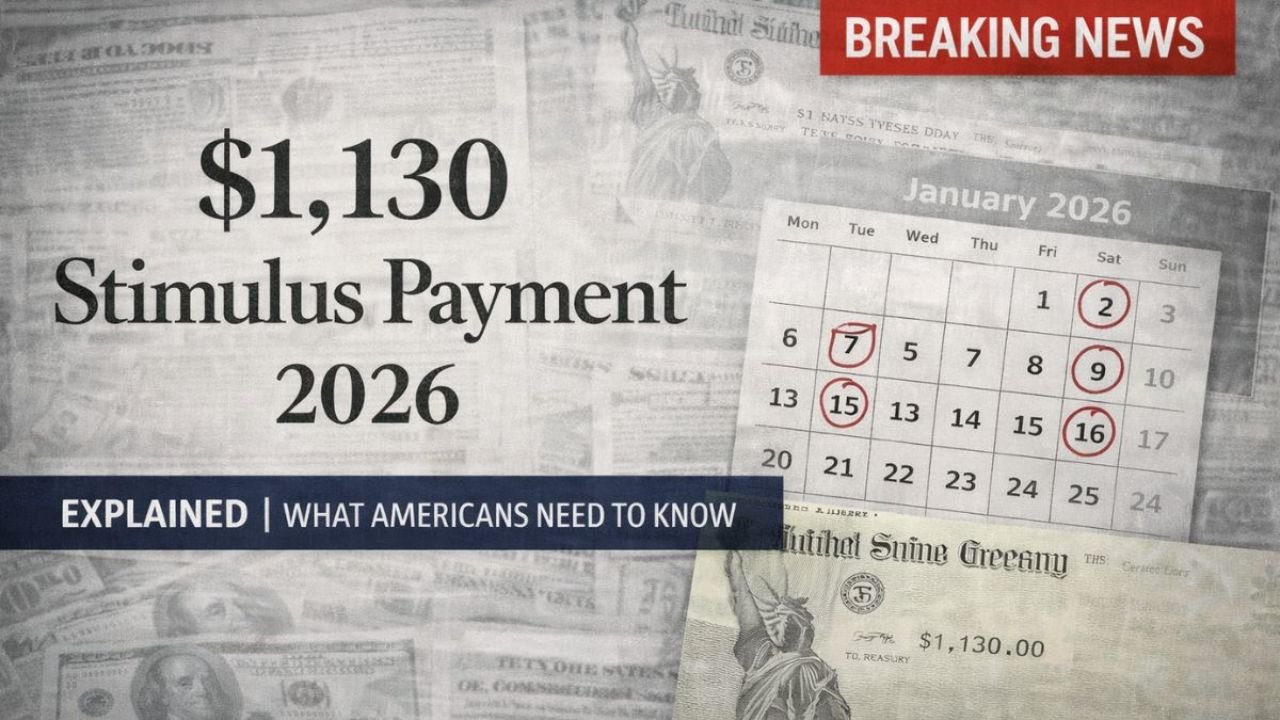
As 2026 unfolds, renewed attention is focusing on a proposed $1,130 stimulus payment that could offer targeted financial relief to millions of Americans. While the program has not yet been finalized through legislation, early policy discussions indicate that it may be designed to help households facing ongoing cost-of-living pressures. Rising expenses for essentials such as food, housing, transportation, and healthcare continue to strain budgets, particularly for low- and middle-income families.
Unlike the broad stimulus checks issued during the pandemic years, this proposed payment is expected to be more targeted, prioritizing those most likely to experience immediate financial benefit. Understanding the potential structure, eligibility factors, and delivery methods can help households stay prepared as official decisions take shape.
What Is the Proposed $1,130 Stimulus Payment?
The proposed $1,130 stimulus payment is being discussed as a one-time economic relief measure rather than a recurring benefit. Its primary goal would be to provide short-term financial support to individuals and families managing elevated living costs in a post-pandemic economy.
Early proposals suggest the payment would function as a direct cash benefit, issued by the federal government and administered through existing systems such as the IRS and other federal agencies. If approved, it would not replace ongoing programs like Social Security or Supplemental Nutrition Assistance but would instead act as a supplemental boost.
Why This Payment Is Being Considered
Economic conditions entering 2026 remain uneven. While some sectors have stabilized, many households continue to feel pressure from inflation, higher interest rates, and increased costs for everyday necessities. Policymakers are exploring targeted relief as a way to support consumer stability without introducing broad, long-term spending programs.
A more focused payment allows resources to be directed toward households that are most vulnerable to rising expenses, including seniors, working families, and individuals already receiving government assistance.
Who Could Be Eligible?
Although no official eligibility rules have been released, projections based on prior relief programs provide insight into who may qualify if the payment is approved.
Income-Based Eligibility
Eligibility would likely center on low- to moderate-income households. Individuals and families below certain income thresholds could receive the full payment, while higher-income earners may receive reduced amounts or be excluded entirely. Adjusted Gross Income from recent tax returns would likely be the primary benchmark.
Seniors and Fixed-Income Households
Seniors living on fixed incomes are frequently included in targeted relief efforts due to limited flexibility in managing rising costs. Those receiving Social Security retirement benefits, disability benefits, or Supplemental Security Income could be prioritized, potentially receiving payments automatically.
Working Families and Benefit Recipients
Working families facing higher childcare, housing, and transportation costs may also fall within eligibility guidelines. Individuals receiving federal benefits such as veterans’ benefits or other income-based assistance programs could be included using existing government records.
Residency and Tax Filing Status
Eligibility would almost certainly require U.S. residency and valid identification on file with federal agencies. Recent tax filing status would play an important role, as government systems rely heavily on tax records to verify income and household information.
How the Payment May Be Delivered
If the $1,130 stimulus payment is approved, distribution is expected to follow established federal payment methods designed for efficiency and security.
Direct Deposit
Direct deposit would likely be the primary and fastest delivery method. Individuals with banking information on file through recent tax returns or benefit programs would receive funds directly into their accounts.
Paper Checks and Debit Cards
For recipients without direct deposit information on file, payments may be sent by paper check or prepaid debit card. These methods typically take longer and depend on accurate mailing addresses.
Phased Distribution Approach
Payments would likely be issued in phases rather than all at once. Staggering distribution helps prevent system overload and reduces administrative delays. This means recipients should not expect everyone to receive funds on the same day.
Expected Timing of the Payment
If approved, early projections suggest payments could begin rolling out in early to mid-2026. Exact dates would depend on legislative approval timelines and administrative readiness.
Historically, even after authorization, several weeks are required to prepare systems, finalize eligibility lists, and begin distribution. As a result, patience is essential, and official announcements should be monitored closely.
How to Prepare Ahead of Time
While the program remains under consideration, there are practical steps households can take now to stay prepared.
Filing recent tax returns accurately and on time ensures your information is available if eligibility is determined using tax data. Keeping banking details and mailing addresses up to date with the IRS and other federal agencies can help prevent delays. For those receiving government benefits, ensuring records are current is equally important.
Preparation does not require signing up through unofficial websites or responding to unsolicited messages. Legitimate programs will not require advance enrollment through third parties.
Avoiding Misinformation and Scams
Whenever potential stimulus payments are discussed, misinformation and scams tend to follow. It is important to remain cautious and rely only on official government sources.
No federal agency will contact you by phone, text message, email, or social media to request personal or banking information to release a payment. You will never be asked to pay a fee to receive a stimulus benefit. Official updates will come through government websites and mailed notices, not through viral posts or private messages.
How This Payment Fits Into Personal Financial Planning
If issued, a $1,130 payment should be viewed as short-term support rather than long-term income. Many households may choose to use it for essential expenses, debt reduction, or rebuilding emergency savings.
Because the payment would be one-time in nature, it is best integrated into a broader financial plan rather than relied upon for recurring obligations.
Final Thoughts
The proposed $1,130 stimulus payment for 2026 represents a potential effort to provide targeted relief during a period of ongoing economic adjustment. While details remain under discussion and no final approval has been granted, understanding the likely structure and eligibility framework can help Americans stay informed and prepared.
The most reliable strategy is to keep financial and tax records current, monitor official government announcements, and remain cautious of misinformation. If the program moves forward, clear guidance will be provided well in advance, allowing eligible households to receive support with confidence and minimal stress.