
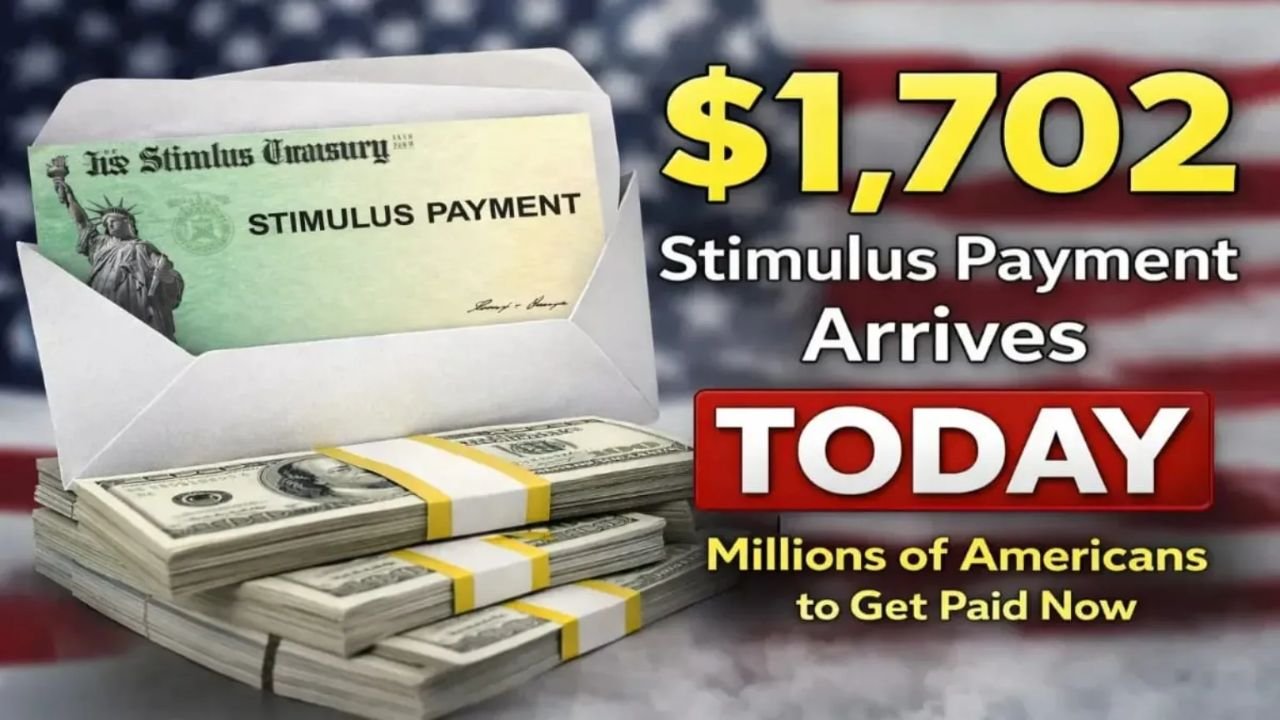
Recently, claims about a $1,702 stimulus payment arriving today have spread rapidly across social media, blogs, and messaging platforms. For many Americans managing rising costs of groceries, rent, and everyday expenses, the idea of new federal relief feels timely and reassuring. However, the reality behind these claims is far less straightforward.
No New Federal $1,702 Stimulus Has Been Approved
Despite the viral excitement, there is no official federal stimulus payment of $1,702 approved for all Americans. The IRS and federal government have not announced any new nationwide stimulus program for 2025 or 2026 matching this amount. Previous stimulus initiatives were linked to the COVID-19 pandemic and ended several years ago.
One key point to note is that legitimate stimulus payments require congressional approval and formal announcements. Any suggestion that a surprise federal check is arriving today without official confirmation should be treated with caution.
Why the $1,702 Figure Keeps Appearing
The $1,702 amount often circulates online because it exists in specific programs or situations that are being misrepresented. One major source is Alaska’s Permanent Fund Dividend, a state-level program distributing annual payments to eligible residents from oil and mineral revenues. In recent years, this payment has been close to $1,702.
Additionally, some federal benefit recipients—such as Social Security, disability, or other regular payments—may see monthly totals near this figure due to cost-of-living adjustments. When these amounts are shared online without context, they are sometimes mislabeled as “stimulus checks,” fueling nationwide confusion.
Payments Being Mistaken for Stimulus
Although some people are receiving money, it is not a new federal stimulus:
- Alaska Permanent Fund Dividend: Annual state payment for eligible residents in Alaska.
- Social Security and disability benefits: Regular monthly payments, sometimes adjusted for inflation.
- Delayed tax refunds or credits: Small groups of taxpayers may receive adjustments from prior tax filings.
These payments are legitimate but specific to certain programs or locations, not a nationwide stimulus initiative.
How Misinformation and Scams Spread
Misleading posts about payments often use dramatic headlines, edited screenshots, or vague claims about money “arriving today.” These viral posts frequently lack references to official government sources and rely on emotional reactions.
Scammers also exploit these rumors. Fake emails, texts, and websites may urge recipients to “confirm” personal or banking information to receive the $1,702 payment. The IRS has repeatedly warned that it does not send unsolicited messages requesting sensitive data. Responding to such scams can result in identity theft and financial loss.
How to Verify Legitimate Payments
To confirm whether a payment is real, rely on official government sources:
- IRS website and IRS online accounts: Check refund status and payment details.
- Social Security benefit statements: Review monthly payment amounts and changes.
- Alaska state government websites: Verify Permanent Fund Dividend updates.
Avoid any message or social media post that pressures you to act quickly or share personal information. Legitimate government payments do not require urgent responses through unofficial channels.
Why False Stimulus Rumors Spread Quickly
Stimulus rumors resonate because they tap into real financial stress. Rising costs of living make Americans hopeful for relief, and seeing a specific figure repeated online creates a sense of credibility. Social media algorithms amplify eye-catching content, often prioritizing engagement over accuracy. Over time, a payment linked to one state or one federal program can be misinterpreted as a nationwide stimulus, which is not the case.
The Real Financial Picture
While no universal $1,702 stimulus is being issued, financial support continues through regular federal and state programs, tax credits, and benefits. Understanding the difference between routine payments and emergency stimulus checks is essential. One-time federal stimulus payments are rare and typically tied to major economic crises, whereas standard benefits and adjustments are ongoing and predictable.
In short, there is no new federal $1,702 stimulus payment arriving today for all Americans. The number being circulated comes from specific state programs, federal benefits, or delayed tax refunds. Rumors are driven by misunderstandings and online misinformation.
Final Takeaway
The best way to protect yourself is to rely on official government communications and remain skeptical of viral claims. Staying informed ensures that you can separate legitimate financial support from rumors, avoid scams, and plan responsibly during periods of economic uncertainty.
Disclaimer: This article is for informational purposes only and does not constitute financial, tax, or legal advice. As of now, no universal $1,702 federal stimulus payment has been approved or announced by the U.S. government or IRS. Payment programs, eligibility rules, and amounts can change. Readers should consult official government sources or qualified professionals for guidance tailored to their individual circumstances.