
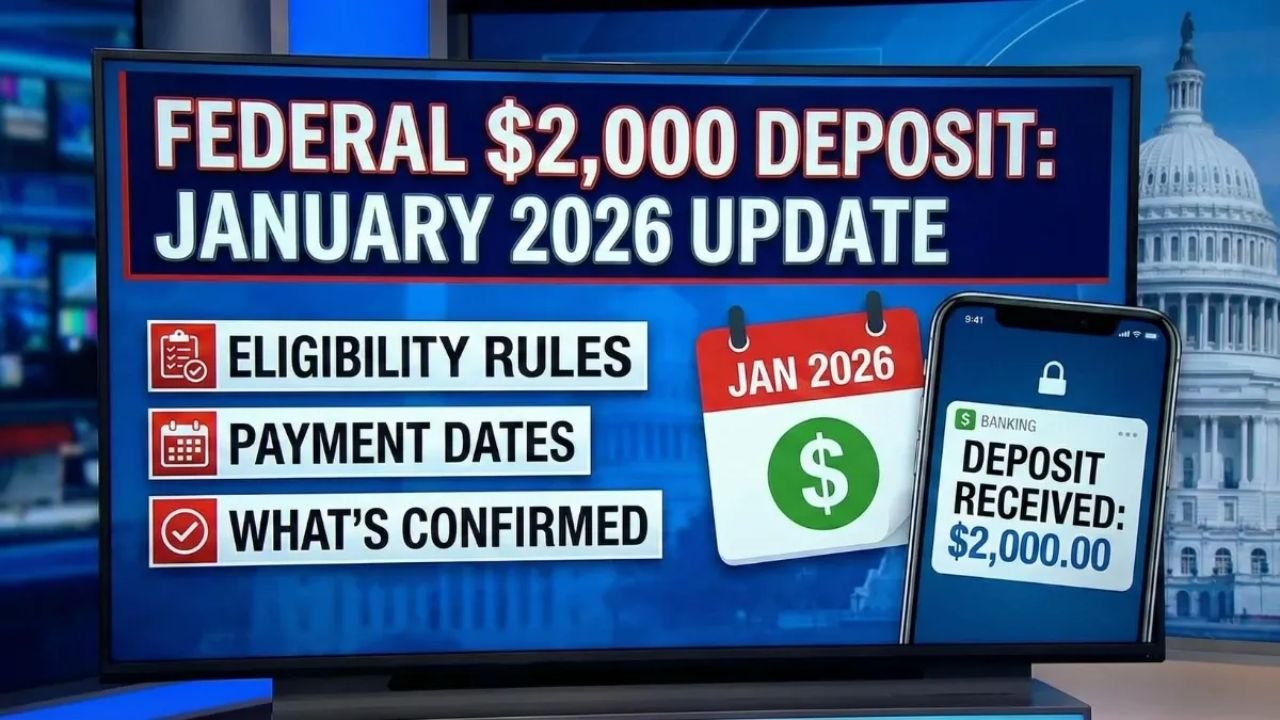
As January 2026 approaches, many Americans are closely monitoring their finances. The start of a new year often brings higher expenses, from rent increases and medical bills to insurance renewals and holiday credit card payments. In this context, news about a potential federal $2,000 deposit has generated hope for some short-term financial relief. However, it is important to understand what this deposit actually represents and what expectations are realistic.
Understanding the Federal $2,000 Deposit
Contrary to popular belief, the federal $2,000 deposit is not a new universal stimulus program. Instead, it refers to existing federal support systems that may result in payments around this amount for eligible individuals. These payments are issued through programs and laws that already exist, administered by federal agencies, and often combine multiple benefits or credits.
For many recipients, the funds may come through tax refunds, Social Security adjustments, or federal assistance programs. Because these programs are ongoing, most people do not need to submit a new application—the deposit reflects what they are already eligible to receive.
Why the $2,000 Figure Gets So Much Attention
Every January, conversations about federal payments increase because tax season begins and benefit programs update payments at the start of the year. Hearing about deposits near $2,000 online can create confusion, as social media posts often present individual experiences as universal events. While some people may see deposits close to this amount, others may receive less—or nothing at all—depending on eligibility.
Who May Qualify
Eligibility for the federal deposit depends on program participation rather than citizenship alone. Payments are typically directed to individuals already enrolled in federal systems, with amounts determined automatically based on income records, benefit status, and filing history.
Potential recipients include:
- Taxpayers owed refunds or credits from the IRS.
- Social Security recipients, including retirees and individuals on disability benefits.
- Veterans receiving VA benefits under existing compensation or pension programs.
- Low-income families enrolled in federal assistance programs.
Why the Amount Can Differ
The $2,000 figure is an estimate, not a guaranteed payment. Each person’s deposit is based on individual circumstances such as income level, tax filing status, benefit type, and dependents. Variations in records or program adjustments mean that two people in seemingly similar situations may receive different amounts, which is why confusion often arises.
Expected Payment Timing
There is no single date for all federal deposits. Timing depends on the responsible federal agency:
- IRS-related deposits may arrive throughout January for early filers who choose direct deposit.
- Social Security payments follow a monthly schedule based on birth dates and benefit type.
- SSI and VA benefits are typically deposited in early January.
Banking processes and federal holidays can also cause minor delays, so patience is necessary when awaiting funds.
How Payments Will Be Delivered
Most federal payments are sent via direct deposit, which is the fastest and safest option. Existing electronic accounts are usually used for these deposits. Individuals without direct deposit may receive paper checks or prepaid debit cards.
Keeping banking and mailing information updated is critical to prevent delays or returned payments. Using official agency portals to update details is recommended.
Steps Beneficiaries Should Take Now
Beneficiaries can prepare to ensure payments arrive smoothly by:
- Verifying eligibility under the relevant federal program.
- Updating personal information, including mailing addresses and bank accounts.
- Filing tax returns accurately and on time if the deposit is related to a tax refund.
- Monitoring official government tools to track payment status.
It is also important to remain cautious, as federal agencies do not solicit sensitive information via unsolicited calls, emails, or texts. Any such requests should be treated as potential scams.
Why This Deposit Matters
For many Americans, a $2,000 deposit is not extra discretionary income but a means to cover essential expenses like heating, groceries, medications, or overdue bills. For those on fixed incomes, even modest financial assistance can significantly ease winter pressures.
Beyond financial relief, knowing that support is available through existing programs can reduce stress and help with financial planning at the start of the year.
Final Thoughts
The federal $2,000 deposit expected in January 2026 reflects ongoing support built into the federal system, rather than a new universal payment. Not everyone will receive it, but those who qualify may find it helpful during a challenging financial period.
Staying informed, keeping records updated, and relying on official sources are the best strategies for navigating these payments. With the right understanding, uncertainty can be replaced with clarity and confidence as the year begins.
Disclaimer: This article is for informational purposes only and does not provide financial, tax, or legal advice. Federal programs, eligibility rules, and payment schedules may change. Readers should consult official government websites or qualified professionals for guidance specific to their situation.