
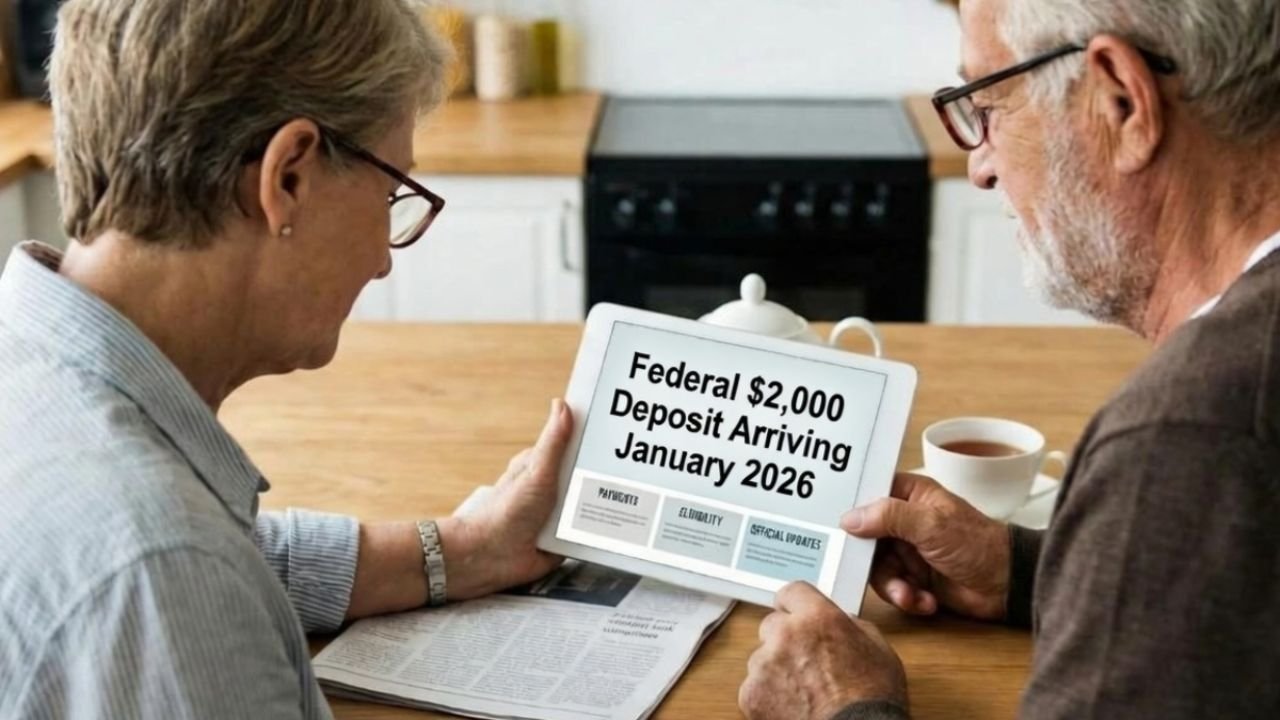
As January 2026 approaches, many Americans are looking for ways to ease financial pressure. Post-holiday expenses, rent, utility bills, groceries, and medical costs can make the start of the year especially stressful. Talk of a federal $2,000 deposit has circulated widely, sparking hope and confusion. Understanding what this payment actually represents—and who may receive it—helps households plan effectively and avoid misinformation.
What the Federal $2,000 Deposit Really Is
The federal $2,000 deposit is not a new stimulus check or emergency payment for all Americans. Unlike previous pandemic relief programs, this amount comes from existing federal benefit systems. Eligible individuals may receive payments that combine to roughly $2,000, depending on income, benefits, and participation in approved programs.
These payments may include:
- IRS tax refunds and refundable credits
- Social Security benefits, including retirees, SSI, and SSDI recipients
- VA compensation and disability pensions
- Other federally approved assistance programs
For eligible recipients, funds are typically automatic, with no new application required.
How the $2,000 Figure Appears
The $2,000 amount often results from combined payments rather than a single deposit. Examples include:
- A Social Security recipient receiving a monthly benefit plus a tax refund or adjustment
- Veterans getting VA payments alongside other benefits
- SSI recipients receiving multiple eligible deposits in the same month
Amounts vary by individual circumstances. Some may receive slightly less or more than $2,000 depending on benefit type, income, and program rules.
Who May Qualify
Eligibility is determined by participation in specific federal programs. Groups likely to receive deposits include:
- Taxpayers eligible for IRS refunds or refundable credits
- Social Security beneficiaries, including retirees, SSI, and SSDI recipients
- Veterans receiving VA compensation or pensions
- Low- and moderate-income households enrolled in federal assistance programs
It’s important to note that citizenship alone does not guarantee eligibility. Payments are based on verified program participation and individual records.
Expected Payment Timing in January 2026
Payment timing depends on the issuing agency:
- IRS refunds are issued throughout January as returns are processed. Early filers and those with adjustments may receive funds sooner.
- Social Security payments follow a schedule based on birth dates, typically arriving mid- to late January.
- SSI payments usually arrive at the start of the month.
- VA benefits are generally deposited in the first few days of January.
Direct deposit ensures faster, more reliable access, while paper checks or prepaid debit cards may take longer. Keeping bank and mailing information current helps prevent delays.
How Payments Are Delivered
Direct deposit is the most secure and efficient method. Most beneficiaries already enrolled do not need to take any additional action. For those without direct deposit, payments may arrive via paper checks or prepaid cards, which can be affected by postal delays.
Preparing to Receive Payments
To avoid missing out on eligible deposits:
- Verify eligibility with the IRS, SSA, or VA
- Update personal information, including bank account and mailing addresses
- File tax returns accurately and early for timely IRS refunds
- Use official government tools to track payments and confirm deposit dates
- Remain cautious of scams, as federal agencies never request personal information through unsolicited emails, texts, or calls
Why This Deposit Matters
For many households, a $2,000 deposit is not extra spending money—it helps cover essentials like rent, groceries, utilities, and medical costs. Beyond financial relief, it provides peace of mind and stability, allowing families to plan for the month ahead without undue stress.
Even routine federal payments can significantly impact local economies, as funds are used for everyday expenses, supporting businesses and service providers.
Clearing Up Misunderstandings
A common misconception is that every American will receive a $2,000 federal payment in January 2026. This is incorrect. Payments are tied to existing programs and eligibility criteria, not a universal government payout. Online rumors and social media posts often oversimplify the situation, leading to false expectations.
Final Thoughts
The federal $2,000 deposit expected in January 2026 represents ongoing support through established programs, not a new stimulus initiative. While not everyone will receive this amount, eligible individuals can benefit significantly.
By understanding the source of these payments, confirming eligibility, and keeping records updated, households can enter the new year with financial clarity and confidence. Accurate information is the best tool for making the most of available federal support.
Disclaimer: This article is for informational purposes only. It does not confirm any new or universal federal payment. Payment amounts, eligibility, and timelines depend on individual circumstances and official federal policies. Readers should verify details through trusted sources such as the IRS, Social Security Administration, or Department of Veterans Affairs.