
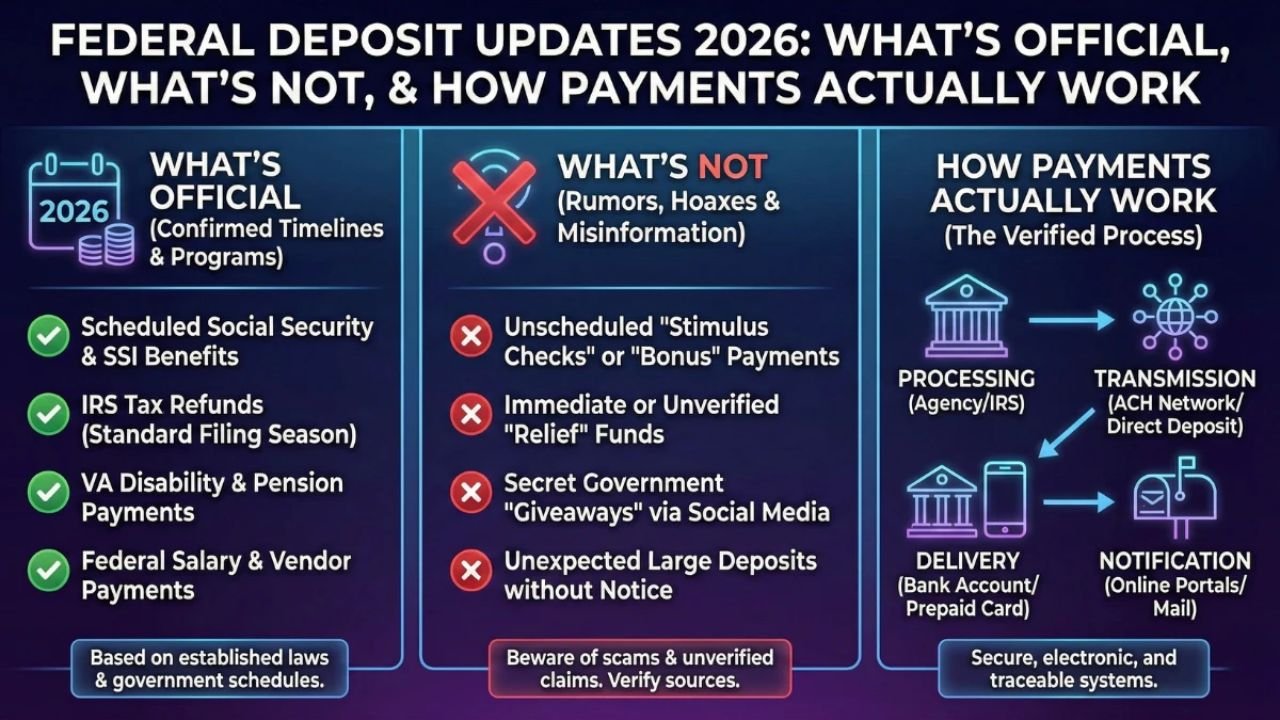
As 2026 unfolds, interest in federal deposit updates has surged. Many Americans notice changing payment statuses, delayed deposits, or encounter unverified claims about new government payments. To separate fact from rumor, it’s crucial to understand that federal deposits follow strict legal and administrative protocols. This guide explains what is officially happening, how federal payments are issued, and the roles of the IRS, SSA, and Treasury.
Is There Any New Federal Deposit Program in 2026?
Currently, no new universal federal deposit program has been approved for 2026. Federal payments require:
- Congressional authorization: Legislation must be passed to create funding.
- Agency guidance: Federal agencies issue official instructions for implementation.
- Treasury approval: Only after legal and administrative steps are complete can payments be released.
Without these steps, any claim of a “new $2,000 deposit” or automatic federal payout is unverified and likely false.
Common Types of Federal Deposits That Already Exist
| Deposit Type | Issuing Authority |
|---|---|
| Tax refunds | IRS |
| Social Security benefits | SSA |
| SSI payments | SSA |
| Veterans benefits | VA |
| Federal pensions | Treasury |
These established programs follow predictable schedules and legal requirements.
Why Federal Deposit Amounts or Status Can Change
It’s common for payments to appear delayed, pending, or adjusted. These fluctuations are typically due to:
- Verification checks or administrative reviews
- Corrections to prior payments or account details
- Banking posting timelines
Such changes do not indicate a new benefit or special federal payment. They reflect routine administrative processes.
How Federal Deposits Are Processed
Federal payments are released by the U.S. Treasury after authorization by the administering agency. Banks then post these funds to individual accounts. This can create the appearance of delays even when the government releases the payment on time.
For example, an IRS refund or Social Security benefit may be sent on schedule, but your bank’s processing rules determine when it shows in your account.
What Federal Deposits Are NOT
It’s important to recognize what does not constitute a legitimate federal deposit:
- Social media announcements or viral posts claiming immediate deposits
- Private websites promising early access or guaranteed payments
- Unofficial sign-up links requesting personal information or fees
Federal agencies never issue surprise deposits without public notice, legal authorization, and direct communication to the beneficiary.
How to Stay Informed
To avoid scams or misinformation, rely solely on:
- Official agency portals (IRS.gov, SSA.gov, Treasury.gov, VA.gov)
- Mailed notices from federal agencies
- Verified direct communications such as emails from registered government domains
Any claim promising guaranteed deposits or early eligibility through unofficial channels should be treated with skepticism.
Key Facts to Remember
- No new universal federal deposit is approved for 2026
- Federal payments require Congressional authorization and agency guidance
- Banks control the final posting time of deposits
- Status changes (pending, delayed, or adjusted) do not imply new benefits
- Only official government notices provide valid information
Conclusion
Federal deposits in 2026 continue under existing programs, including tax refunds, Social Security, SSI, VA benefits, and federal pensions. Any new payments would require formal Congressional approval and official guidance before distribution. By understanding how federal deposits are authorized and processed, Americans can navigate payment updates confidently, avoid misinformation, and protect themselves from scams.
Disclaimer: This article is for informational purposes only and does not constitute financial, legal, or tax advice. Federal deposit programs are governed by law and official government notifications.