
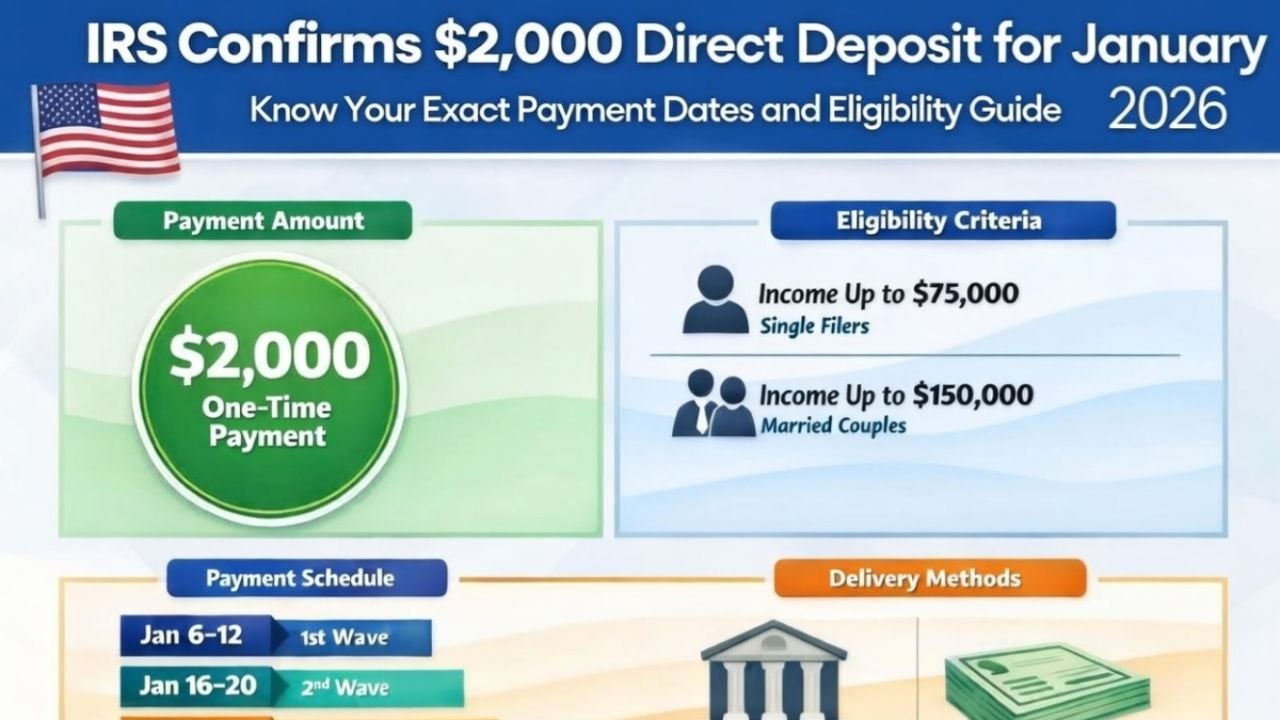
As January 2026 unfolds, a familiar topic is gaining traction across social media, news feeds, and dinner-table conversations in the United States: an IRS $2,000 direct deposit. The discussion has intensified recently, with videos, forwarded messages, and online posts claiming that the Internal Revenue Service has begun issuing a one-time federal relief payment. For many households grappling with winter bills, credit card debt, and rising living costs, the prospect of immediate federal support is understandably compelling.
Understanding the January 2026 $2,000 Payment
Unlike routine tax refunds or credit adjustments, this payment is described as separate from annual filings. Reports suggest it would serve as direct relief, aimed at providing timely financial assistance to qualifying households. The distinction matters: it affects eligibility, timing, and whether recipients need to take any action to receive the funds. Separating plausible policy initiatives from online speculation is crucial for households planning early-year finances.
Why the Payment Conversation Has Reemerged
The renewed attention stems from economic signals and past operational precedent. While inflation has moderated compared to pandemic-era highs, everyday costs—including housing, healthcare, and insurance—remain elevated. Policymakers face pressure to demonstrate responsiveness, particularly in a first-quarter environment leading into an election year.
The IRS’s track record during prior relief efforts also fuels belief in the possibility of a January 2026 payment. The agency has previously demonstrated the ability to distribute large-scale funds rapidly using existing tax records, making it a logical channel for targeted assistance. Many Americans remember similar mechanisms from recent federal relief programs, which adds credibility to online discussions—even when formal announcements are absent.
Eligibility Criteria and Potential Beneficiaries
According to circulating reports, eligibility would rely on existing tax data rather than new applications. Income thresholds are expected to mirror past relief efforts, with full payments for moderate earners and gradual reductions for higher incomes. This method allows the IRS to identify recipients efficiently using 2024 or 2025 returns already on file.
The primary beneficiaries mentioned include low- and middle-income workers, retirees with modest taxable income, and families supporting dependents. Public finance analysts suggest that a targeted, one-time approach is more administratively feasible than a broad-based payment, prioritizing households where $2,000 can meaningfully improve month-to-month financial stability.
Payment Timing and Distribution
Reports indicate that any potential payment would be issued in waves throughout January 2026, rather than a single nationwide release. Direct deposits would likely be processed first, reflecting the IRS’s preference for electronic transfers. Taxpayers who have previously received refunds via direct deposit would, in theory, receive funds early in the distribution schedule.
Paper checks, if issued, would likely follow later in the month. This staggered approach helps manage system loads, minimizes errors, and explains why some households may receive payments earlier than others. Past relief programs highlight the importance of managing expectations, as simultaneous deposits across millions of accounts can lead to temporary confusion or delays.
Risks of Misinformation
While the $2,000 payment conversation mirrors prior federal relief initiatives, it is important to note critical differences. Previous programs were authorized through formal legislation, accompanied by official IRS announcements and dedicated guidance pages. In contrast, the January 2026 discussions largely circulate through secondary reporting and social media sharing, increasing the risk of exaggeration and confusion.
Scammers often exploit this environment. Messages promising “instant release” or requesting banking information are almost certainly fraudulent. The IRS processes legitimate payments automatically and does not call, text, or email taxpayers requesting sensitive personal information. Verification through official IRS channels is essential to avoid falling victim to scams.
Preparing for Possible Payments
While official confirmation is pending, households can take proactive steps. Ensuring that bank account information, mailing addresses, and tax records are up to date with the IRS helps facilitate any future payments and supports routine refunds during the 2026 tax season.
Experts emphasize relying on verified sources rather than social media speculation. Any authorized payment would come with clear IRS guidance detailing eligibility, timing, and frequently asked questions. Until that confirmation arrives, taxpayers should treat the $2,000 deposit as a possibility—not a guarantee—and avoid planning expenses based solely on unverified reports.
Final Thoughts
The January 2026 IRS $2,000 direct deposit discussion underscores the importance of distinguishing between confirmed government actions and circulating rumors. While the IRS remains a capable vehicle for large-scale payments, households should prioritize financial planning based on verified information. Staying informed, maintaining accurate records, and exercising caution in response to online claims are the best strategies for navigating this period of uncertainty.
Disclaimer: This article is for informational and journalistic purposes only. It reflects publicly circulating reports regarding a potential IRS $2,000 direct deposit in January 2026 and does not constitute financial, legal, or tax advice. Government programs and payment policies are subject to change. Readers should consult official IRS statements or authorized sources before taking action.