
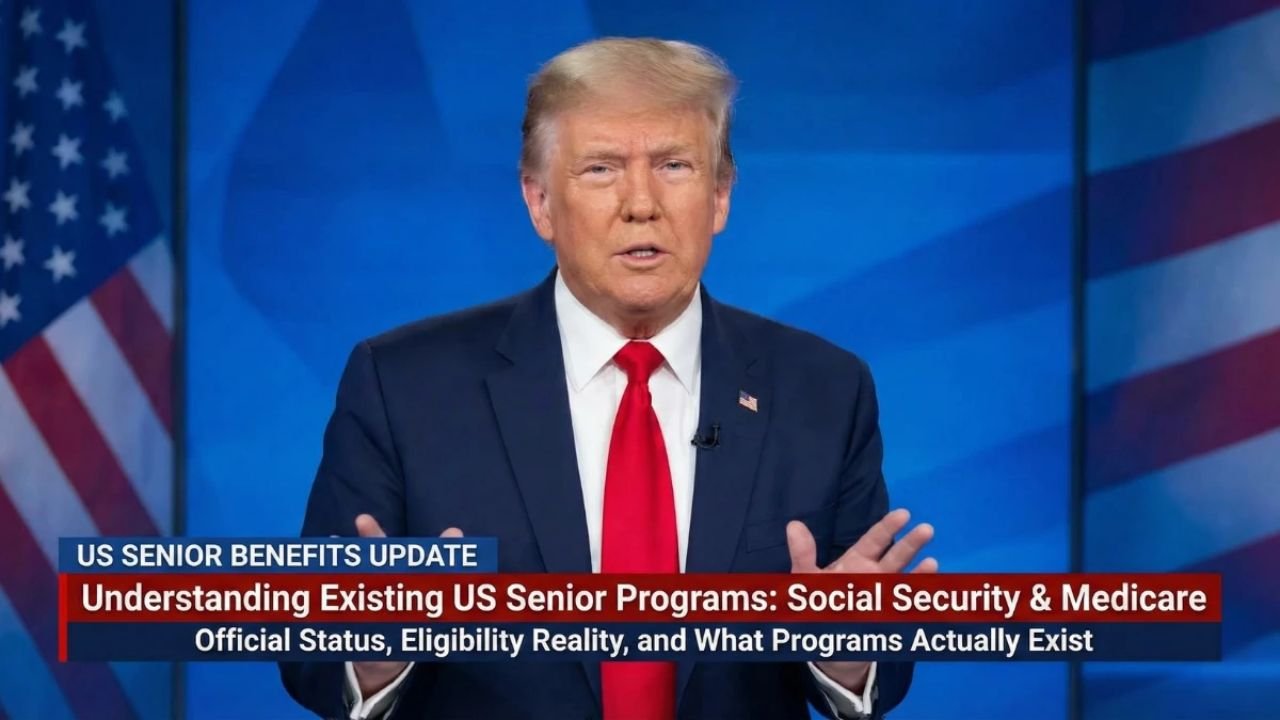
Recent claims about a “new pension for all seniors in the United States” have drawn attention online, often linking Social Security (SSA), SSDI, SSI, and VA benefits into a single supposed program. These statements are misleading. At present, the U.S. government has not introduced a universal pension for all seniors. Existing benefits continue under established law, administered through separate federal programs. This article outlines the verified reality, who qualifies for current benefits, and how seniors can access them.
Is There a New Universal Pension for All Seniors?
No federal program currently provides a single, nationwide pension for all seniors. Benefits for older Americans continue to be managed separately:
- Social Security Administration (SSA) handles retirement and disability benefits.
- U.S. Department of Veterans Affairs (VA) administers pensions and compensation for eligible veterans and survivors.
Any new nationwide pension would require Congressional legislation, funding approval, and agency implementation, none of which have occurred.
Existing Federal Programs for Seniors
| Program | Who It Serves |
|---|---|
| Social Security (SSA) | Retired workers and their families |
| Social Security Disability Insurance (SSDI) | Disabled workers with sufficient work credits |
| Supplemental Security Income (SSI) | Low-income seniors and disabled individuals |
| VA Pensions & Compensation | Eligible veterans and survivors |
| State Programs | Limited, state-specific assistance for seniors |
Each program has unique eligibility rules and application processes. There is no single enrollment system covering all programs.
Eligibility Reality for Each Program
- Social Security Retirement Benefits: Determined by work history and age at claiming; delaying claims can increase monthly payments.
- SSDI: Requires qualifying disability and sufficient work credits.
- SSI: Based on income and asset limits, aimed at low-income seniors or disabled individuals.
- VA Pensions: Requires verified military service, financial eligibility, and sometimes age or disability criteria.
These programs are independent, meaning a senior may qualify for one, some, or all, but benefits are administered separately.
How Benefits Are Actually Claimed
Seniors must file individually with each relevant agency:
- SSA manages Social Security retirement, SSDI, and SSI applications.
- VA handles pension and compensation claims for veterans and eligible survivors.
Approval is never automatic; eligibility must be verified according to program-specific rules.
Why “New Pension for All Seniors” Claims Circulate
These rumors often emerge during:
- Election cycles and political discussions
- Budget debates or proposed spending increases
- Cost-of-Living Adjustment (COLA) announcements
Benefit increases or proposals are sometimes misinterpreted as a new universal pension. However, no official announcement supports such a program.
What Has Not Changed
- No automatic enrollment for seniors into a combined program
- SSA, SSI, SSDI, and VA remain separate systems
- No new universal monthly pension has been introduced
Existing benefits continue under current law and follow established schedules.
Key Facts
- No new universal pension for all U.S. seniors exists
- SSA, SSDI, SSI, and VA benefits remain independent programs
- Each program has its own eligibility rules and application process
- Seniors must apply individually to each program for which they qualify
- Only Congress can create a new nationwide pension
Conclusion
The concept of a new pension covering all seniors in the United States is not supported by official sources. Seniors may qualify for one or more existing programs, but benefits are not consolidated into a single new pension. Accurate information is available only through official channels, including SSA.gov and VA.gov, and seniors should rely on these sources to avoid misinformation and scams.
Disclaimer: This article is for informational purposes only and does not constitute financial, legal, or retirement advice. Federal benefit programs are governed by law and official government regulations.